Table of Contents
ToggleLiving room plant decor has become more than a design trend, it’s a practical way to breathe life into indoor spaces. Plants clean the air, soften hard architectural lines, and create focal points that tie a room together without expensive renovations. Whether someone’s space gets abundant natural light or relies on a north-facing window, there’s a plant strategy that works. This guide walks through selecting plants that match your lifestyle, arranging them for maximum visual impact, and keeping them healthy without becoming a second job. Think of it as building a green framework that transforms the living room into a more inviting, connected space.
Key Takeaways
- Living room plant decor cleans the air, softens hard lines, and creates natural focal points without expensive renovations.
- Match plants to your light conditions—snake plants and pothos thrive in low light, while fiddle leaf figs and rubber plants need brighter spaces.
- Arrange plants at varying heights and odd numbers (3 or 5) to create visual interest and intentional clusters rather than random placement.
- Overwatering is the leading cause of houseplant death; check soil moisture with your finger 1–2 inches down before watering, and always use pots with drainage holes.
- Select planters based on material breathability and size—ceramic for moisture-loving plants, terracotta for succulents, and pots 1–2 inches larger than the root ball to support healthy growth.
- Start with low-commitment plants like snake plants and pothos, then expand your living room plant decor collection as your confidence and space grow.
Choosing the Right Plants for Your Living Room Style
The foundation of any plant decor scheme is picking varieties that actually thrive in the specific conditions you have. Mismatched plant choice and environment leads to brown leaves, dropped growth, and wasted money.
Start by assessing light: north-facing rooms get indirect light most of the day: south-facing spaces get 6+ hours of direct sun. East and west exposures land somewhere in between. Once you know your light reality, match it to plant tolerances.
Consider humidity and temperature consistency too. Living rooms typically stay warmer and have steadier conditions than bedrooms or bathrooms, which works in favor of tropical varieties. If the room stays above 65°F year-round and gets occasional misting, you have options like fiddle leaf figs or rubber plants. If drafts come from windows or HVAC vents, stick with hardier specimens like pothos or snake plants that tolerate fluctuating conditions.
Size matters as much as species. A large tree-form plant like a monstera can anchor a corner, while smaller tabletop plants fill shelves and sideboards. Mix sizes for visual rhythm, don’t cluster everything at eye level.
Best Plants for Low-Light Living Rooms
Not every living room has a sunny wall. If the space relies on lamps and ambient window light, these work reliably.
Snake plants (Sansevieria) are nearly unkillable. They tolerate low light, inconsistent watering, and temperature swings. Tall, architectural varieties reach 3–4 feet, making them excellent corner statements. They need water only every 3–4 weeks in cooler months, less in winter.
Pothos trails from shelves or climbs a moss pole in moderate to low light. Growth is vigorous, expect several feet of vine in a season. Trim back when it gets leggy.
ZZ plants (Zamioculcas) feature glossy, symmetrical leaflets and handle neglect well. They’re slower-growing than pothos but create elegant, structured forms.
Peace lilies produce small white spathes (often mistaken for flowers) and actually signal thirst by drooping, a built-in watering reminder. Moderate light and regular misting keep them happy.
Chinese evergreens (Aglaonema) come in variegated patterns (silver, pink, burgundy against green). Slow to moderate growth and low-light tolerance make them steady performers.
Designing Plant Arrangements and Focal Points
Randomly scattering plants around a room looks accidental. Strategic placement creates cohesion and draws the eye where you want it.
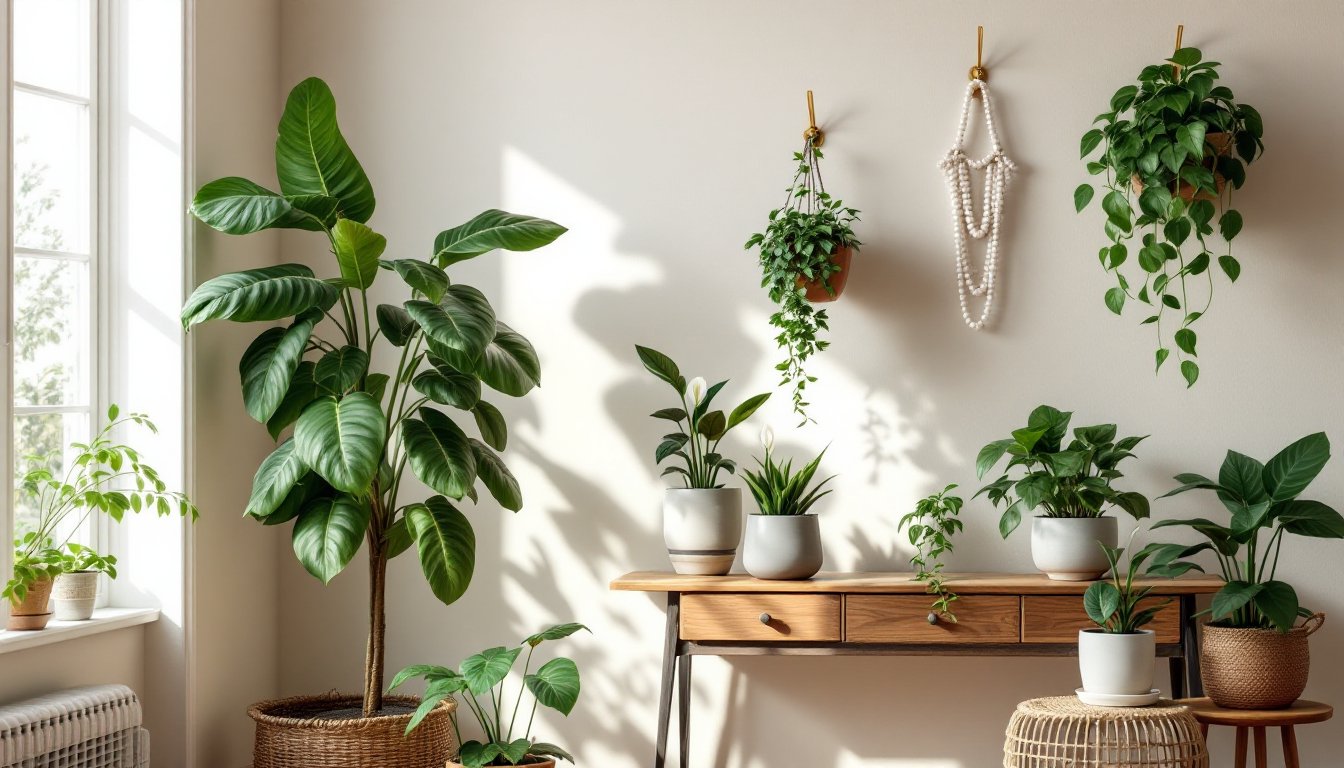
Start with a focal point, a corner, a console table, or a tall plant stand. Build around it. If a large fig or monstera anchors a corner, cluster smaller plants (snake plant, pothos in a hanging planter, a low succulent) at its base or on nearby surfaces. This creates a “plant vignette” that feels intentional, not cluttered.
Living room traffic patterns matter. Avoid blocking walkways or sightlines to windows. Place tall plants where they don’t cast shadows on seating areas.
Use odd numbers (3 or 5 plants grouped) rather than pairs, it’s a design principle that reads as more natural and less formal.
Creating Layered Heights and Visual Interest
Monotony is the enemy of good plant decor. Vary heights to create depth and rhythm.
Floor-level plants (a 4–5 foot fiddle leaf fig or tree-form rubber plant) anchor the space. Tabletop plants (18–24 inches on a console or shelf) come next. Hanging planters suspended at 6–7 feet fill vertical space above seating.
Grouping plants at different tiers within one corner works well. Place a tall upright plant against the wall, a medium plant on a low side table in front, and a trailing variety in a wall-mounted planter or hanging bracket above. The eye travels up, across, and down, creating visual interest without the space feeling crowded.
Vary foliage shapes too. Pair feathery fern fronds with the bold, solid leaves of a rubber plant. Use trailing pothos against architectural, upright plants. Texture contrast (smooth spathiphyllum leaves next to bumpy syngonium stems) adds sophistication.
Plant Care Essentials for Thriving Indoor Greenery
The difference between a plant that struggles and one that thrives often comes down to three basics: water, light, and drainage. Get these right and most plants forgive occasional neglect.
Watering is the leading cause of houseplant death. The instinct to water “on a schedule” kills more plants than underwatering. Instead, check soil moisture 1–2 inches down with your finger. If it feels dry, water. If moist, wait. Frequency depends on season, pot size, and soil type. In growing season (spring and summer), plants need water more often: in dormancy (fall and winter), much less.
Water at the soil level, not the leaves, to prevent fungal issues. Use room-temperature water or let tap water sit overnight to let chlorine evaporate.
Drainage is non-negotiable. Every pot needs a drainage hole. Without it, roots sit in waterlogged soil, rotting. If a decorative pot lacks drainage, use a nursery pot inside it, or drill a hole in the bottom with a masonry bit.
Humidity varies by species. Most tropical plants appreciate misting 2–3 times a week, but living rooms with HVAC can dry the air. A humidifier near a plant cluster, or grouping plants together so they create a microclimate, helps.
Fertilizing matters during the growing season (spring and summer). Use a balanced, water-soluble houseplant fertilizer at half strength every 4 weeks. In dormancy, skip it, plants aren’t actively growing and don’t need extra nutrients.
Pest checks happen monthly. Spider mites, mealybugs, and scale insects hide on the undersides of leaves. Spray with neem oil if infestation appears, following the label carefully. Isolate affected plants to prevent spread to neighbors.
Styling Pots and Planters to Complement Your Decor
The planter is the frame: the plant is the art. Pot selection affects both aesthetics and plant health.
Material choices each have trade-offs. Ceramic and glazed pots are attractive but heavy and less breathable, soil dries slower, which suits some plants (pothos, peace lilies) but not others (succulents, snake plants that prefer drier conditions). Terracotta breathes well, looks natural, and dries fast, ideal for succulents and ZZ plants, but it’s fragile and mineral deposits show on the exterior.
Plastic is lightweight and affordable, but feels cheap and can crack in cold. Concrete planters are trendy, durable, and modern but add serious weight. For a floor plant, weight can be an asset (stability): for a shelf, it’s a liability.
Size matters for growth. A pot should be 1–2 inches larger in diameter than the current root ball. Too large, and excess soil holds moisture, inviting root rot. Too tight, and roots circle endlessly. Upsizing by one pot size every 1–2 years supports healthy growth without wasting soil.
Color and style should complement the living room palette, not compete with it. Neutral creams, grays, and whites suit most decor: bold colors work if they echo existing accents. Matte finishes feel modern: glazed or textured pots add visual depth.
Mix planter styles within a grouping for personality. A tall ceramic planter, a woven basket (with a nursery pot inside), and a sleek cylindrical pot planted with different species creates visual interest, similar to how you’d layer decor on a shelf.
Consider saucers or trays underneath to protect floors and furniture from water damage. They’re practical, not just pretty.
Conclusion
Living room plant decor transforms the space by grounding the design, improving air quality, and creating natural focal points. The key is honest assessment: choose plants suited to available light, arrange them for visual balance, keep them healthy through consistent care, and select pots that tie the scheme together. Start small, a fiddle leaf fig in the corner and a pothos on a shelf. Once those thrive, expand the collection. Green spaces evolve: they don’t arrive finished. Build the framework, stay consistent with watering and light, and the living room becomes a more inviting, vibrant place.