Table of Contents
ToggleA navy sofa is one of the most versatile anchors for a living room. Its deep, timeless color brings sophistication and calm to any space while providing a neutral backdrop for creative styling. The challenge? Knowing how to build a cohesive room around it without making the space feel dark or cold. Whether someone is working with a coastal aesthetic, modern minimalist vibe, or traditional warmth, a navy sofa living room can be tailored to fit. This guide walks through seven design strategies that transform a navy sofa into the hero of a living room, from wall color and lighting choices to layered textures and complementary décor.
Key Takeaways
- Navy sofa living room designs succeed by pairing the sofa with warm neutrals like cream, taupe, or warm gray on walls to keep the space feeling open and prevent visual heaviness.
- Layered lighting from ambient, task, and accent sources transforms a navy sofa into a focal point, with warm-toned bulbs (2700K) bringing out the fabric’s richness and preventing a cold atmosphere.
- Pillows are where personality shines—use 50% neutral foundations, 30% warm secondary colors (coral, sage, terracotta), and 20% bold jewel tones, mixing materials like linen, velvet, and wool for depth.
- Light-colored or patterned rugs (at least 8×10 feet) ground the navy sofa and define the living room zone, while providing visual contrast that prevents the furniture from feeling heavy.
- Wall art, mirrors, and curated décor shelves with mixed finishes (wood, metal, brass) complete the navy sofa living room by adding warmth, light reflection, and intentional visual interest without clutter.
- Supporting furniture in natural wood and metal finishes creates balance and prevents monotony—pairing warm walnut tables with brass accents or mixed-material pieces ensures the navy sofa remains the confident anchor.
Choose Complementary Wall Colors That Balance Your Navy Sofa
Wall color sets the mood for how a navy sofa reads in a room. Pairing navy with warm neutrals, cream, warm gray, or soft taupe, creates an inviting backdrop that keeps the space feeling open. These tones prevent the navy from dominating visually and let the sofa remain the star without overwhelming the walls.
For a bolder approach, light blue-gray walls complement navy beautifully, creating a monochromatic palette that feels intentional and calming. The slight shift in tone prevents monotony while maintaining a cohesive, serene atmosphere. Alternatively, warm white or ivory walls offer crisp contrast: the navy sofa pops against bright walls without feeling jarring.
Avoid pairing navy with dark wall colors. Two dark tones compete for attention and shrink the perceived room size. If the goal is drama, reserve dark accents for one accent wall or trim rather than all four walls. Test paint samples on the actual walls and observe them at different times of day, artificial lighting and natural light change how colors appear against navy upholstery.
Layer Lighting to Highlight Your Navy Sofa as a Focal Point
Lighting transforms how a navy sofa functions in a living room. Overhead fixtures alone often cast shadows that make navy upholstery disappear into a dark corner. Layering multiple light sources, ambient, task, and accent, brings the sofa forward and creates visual warmth.
Start with ambient lighting from a ceiling fixture or flush mount to establish baseline brightness. Add task lighting with table lamps on side tables flanking the sofa: this pulls focus to the seating area and provides functional light for reading. Swing-arm wall sconces above the sofa are another smart option if floor space is tight. For accent lighting, consider recessed ceiling lights or uplighting behind the sofa that illuminate artwork or throw a soft glow on the upholstery.
Warm-toned bulbs (2700K color temperature) work best with navy, as they bring out the richness of the fabric and prevent the space from feeling cold. Dimmer switches give flexibility, bright for entertaining, softer for relaxation. Avoid purely cool white light, which emphasizes the coolness of navy and can make a room feel sterile.
Mix Accent Pillows and Textures for Depth and Comfort
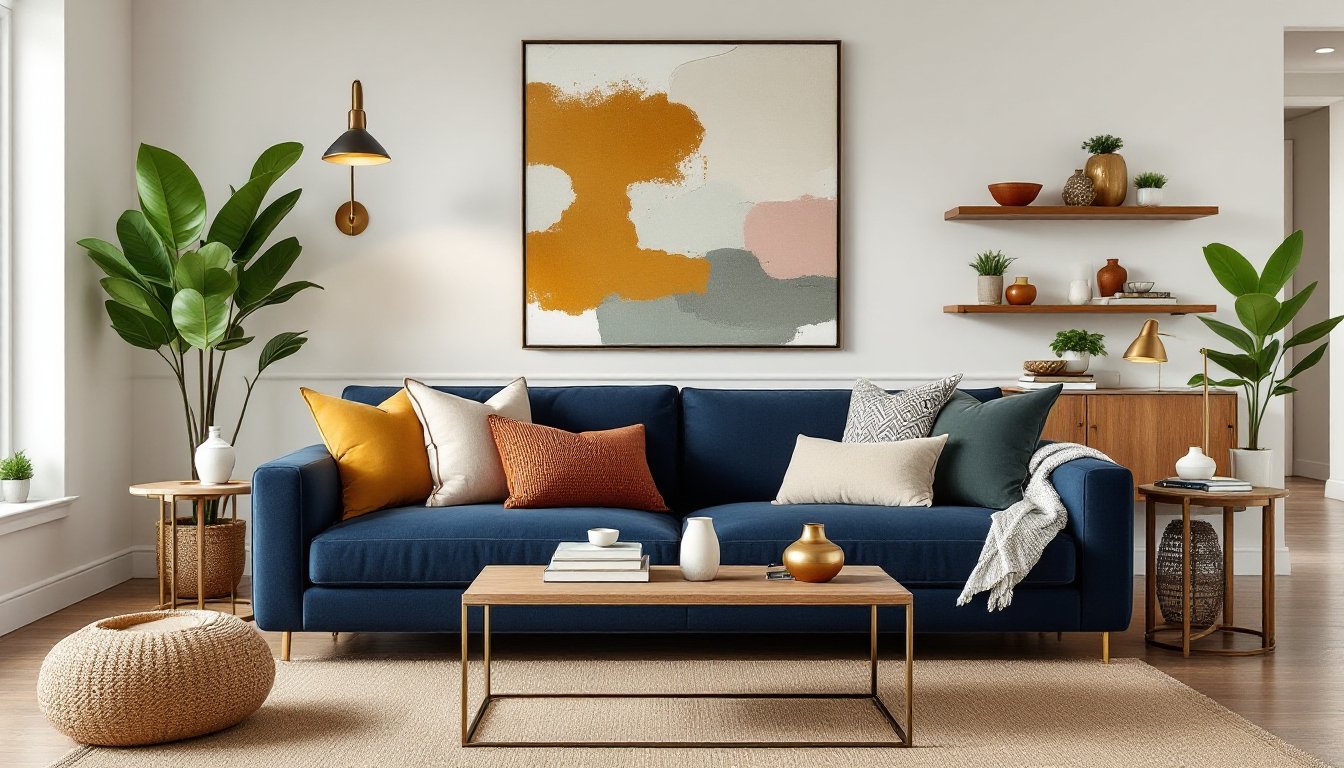
Pillows are where personality lives on a navy sofa. Layering complementary colors and materials breaks up the solid expanse of upholstery and invites texture. Start with a foundational color, cream, warm gray, or soft gold, for 50% of the pillow mix. This neutral anchors the design without visual competition.
Add secondary accent colors in 30% of pillows: soft coral, sage green, or warm terracotta create warmth against navy. Reserve bold jewel tones (emerald, burnt orange) for just 20% of pillows so they accent rather than dominate. Mix materials too, linen, velvet, wool knit, and faux fur add tactile interest. A knit throw pillow feels different from a silk one, and that variety keeps the eye engaged.
Layer heights by mixing larger (24–26 inch) pillows with medium (18–20 inch) and smaller accent pillows (12–16 inch). Don’t arrange them in a uniform grid: cluster them asymmetrically for a natural, lived-in feel. Include at least one textured pillow in a contrasting color, a chunky cream cable-knit or rust linen, to ground the arrangement and add dimension.
Select Rugs and Flooring That Ground Your Design
A rug anchors the sofa and defines the living room as a cohesive zone. Light-colored rugs (cream, soft gray, natural jute) brighten the area around navy seating and prevent the furniture from feeling heavy. A large area rug (at least 8×10 feet) under and around the sofa base creates visual continuity and makes the sitting area feel intentional rather than scattered.
Pattern works too, geometric designs, subtle stripes, or low-contrast florals add visual interest without clashing with navy. Avoid dark rugs that blend with dark upholstery: the contrast between sofa and floor is what defines the space. Natural fiber rugs (jute, sisal, or wool blends) add warmth and texture while being practical for high-traffic areas.
If hardwood or concrete floors are present, a rug becomes even more important, it softens the space and provides acoustic absorption. In rooms with lighter flooring (light wood, tile), the rug still serves as a grounding layer that ties the navy sofa to the broader room. Layer smaller accent rugs on top of the main rug for added texture and visual hierarchy if the design can support it.
Incorporate Wall Art and Décor to Complement Navy Tones
Wall art above and around a navy sofa is the finishing touch that transforms a sofa from furniture to a designed focal point. Abstract pieces with warm accents (mustard, blush, warm gray) bridge navy and lighter room elements. Gallery walls with mixed frame finishes (natural wood, black metal, brass) add layered visual interest without competing for attention.
Scales matter: a large statement piece above the sofa centers the composition, while multiple smaller pieces create movement. Incorporate artwork that echoes the color story, pieces with navy accents, cream, or warm metallics feel intentional rather than random. Mirrors, especially those with ornate or painted frames, reflect light and expand the room visually.
Decor shelves or floating shelves flanking the sofa offer space for layered styling: books, ceramic vessels, brass candleholders, or small plants. Avoid dense clutter: leave breathing room. A single well-chosen object, a sculptural plant, a framed textile, a painted tray, creates impact when surrounded by negative space. The goal is curation, not collection.
Add Wooden and Metal Furniture Pieces for Visual Interest
Supporting furniture around a navy sofa should include natural and metallic finishes that contrast with the soft upholstery. Natural wood tables, whether warm walnut, light oak, or honey-toned reclaimed wood, create warmth and add tactile contrast. Wood grounds a navy sofa in traditional or modern farmhouse aesthetics without competing for visual dominance.
Metal accents (brass, copper, matte black, or stainless steel) introduce shine and structure. A brass side table, metal-frame bookcase, or iron coffee table adds contemporary edge alongside navy softness. The key is mixing finishes so one material doesn’t take over. A room with all wood feels wooden: one with all metal feels cold. Pairing them creates balance.
Consider end tables in wood with metal legs, a coffee table with a metal frame and natural wood top, or a vintage-inspired cart with mixed materials. Plants on wood shelves, brass lamps on wooden tables, and mixed-metal wall sconces create layers without overwhelming the space. Scale matters, small accent tables and narrow shelving don’t interrupt sight lines or crowd the seating area.
Conclusion
A navy sofa living room succeeds when each design element, walls, lighting, pillows, rugs, art, and supporting furniture, works together to balance the sofa’s depth with warmth and visual interest. The key is starting with a color and lighting foundation, then layering textures, materials, and accent pieces that guide the eye without creating visual chaos. With thoughtful choices on complementary colors, proper lighting, and intentional décor, a navy sofa becomes the confident anchor of a living room that feels both sophisticated and inviting in 2026.