Table of Contents
ToggleA modern chandelier can completely reshape a living room, it’s one of the few fixtures that works as both functional lighting and bold design statement. Unlike traditional chandeliers draped in crystals, today’s models embrace clean lines, asymmetrical forms, and mixed materials that fit contemporary homes. Whether someone’s renovating their entire space or just refreshing the overhead lighting, choosing the right modern chandelier involves understanding design principles, scale, materials, and electrical requirements. This guide walks through everything needed to pick and install a chandelier that delivers style and proper illumination without overselling the space.
Key Takeaways
- A modern chandelier serves as both functional lighting and a bold design statement, anchoring your living room with sculptural form and minimalist aesthetics that work for contemporary and transitional interiors.
- Proper scale is critical: aim for a chandelier diameter that’s 50-66% of your seating area’s width, and hang it at least 7 feet above the floor to avoid overwhelming the space.
- Choose durable materials like sealed brass, matte black, or brushed nickel finishes; mixed materials and intentional negative space are hallmarks of modern chandelier design.
- Install your modern chandelier on an appropriately rated electrical box (50+ pounds requires a fan-rated or heavy-duty box) to ensure safety and compliance with electrical codes.
- Pair your chandelier with dimmable LED bulbs in warm white (2700-3000K) to reduce energy consumption by 75-80% while creating inviting, adjustable lighting that enhances your living room’s ambiance.
- Mid-range fixtures ($500-$1,500) offer the best value for durability and design quality, lasting 10-15 years without the premium pricing of designer brands.
Why Modern Chandeliers Transform Your Living Room
A well-chosen chandelier does far more than illuminate a room, it anchors the entire design. Modern chandeliers prioritize sculptural form and minimalist aesthetics over ornamentation, making them more versatile for contemporary and transitional interiors.
The visual impact is immediate. A geometric pendant cluster or linear bronze fixture draws the eye upward and creates focal point interest that recessed lighting simply can’t match. It sets the tone for the whole room without requiring color or pattern elsewhere.
Beyond aesthetics, a living room chandelier provides layered lighting. Most rooms need ambient light (overall illumination), task light (for reading or detail work), and accent light (to highlight features). A modern chandelier typically handles ambient and some task lighting, so the homeowner isn’t relying on a single switch to set the mood.
From a practical standpoint, upgrading to a modern chandelier often means adding dimmers and possibly installing a new circuit if the existing fixture box is underdimensioned. It’s worth doing right the first time.
Key Design Features That Define Modern Chandeliers
Modern chandeliers share recognizable hallmarks that set them apart from traditional and transitional styles.
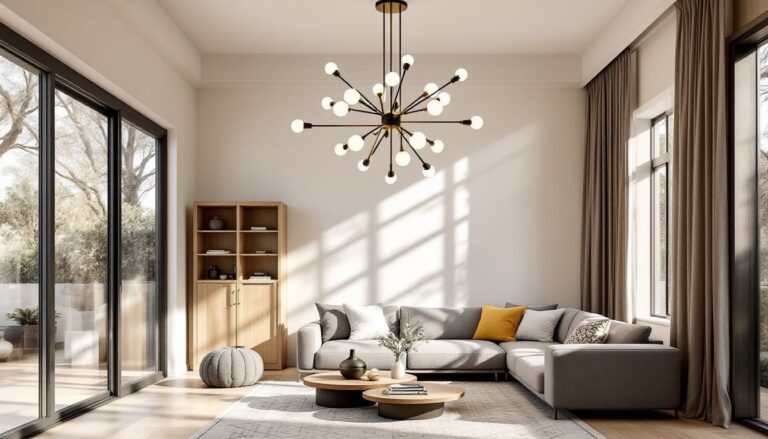
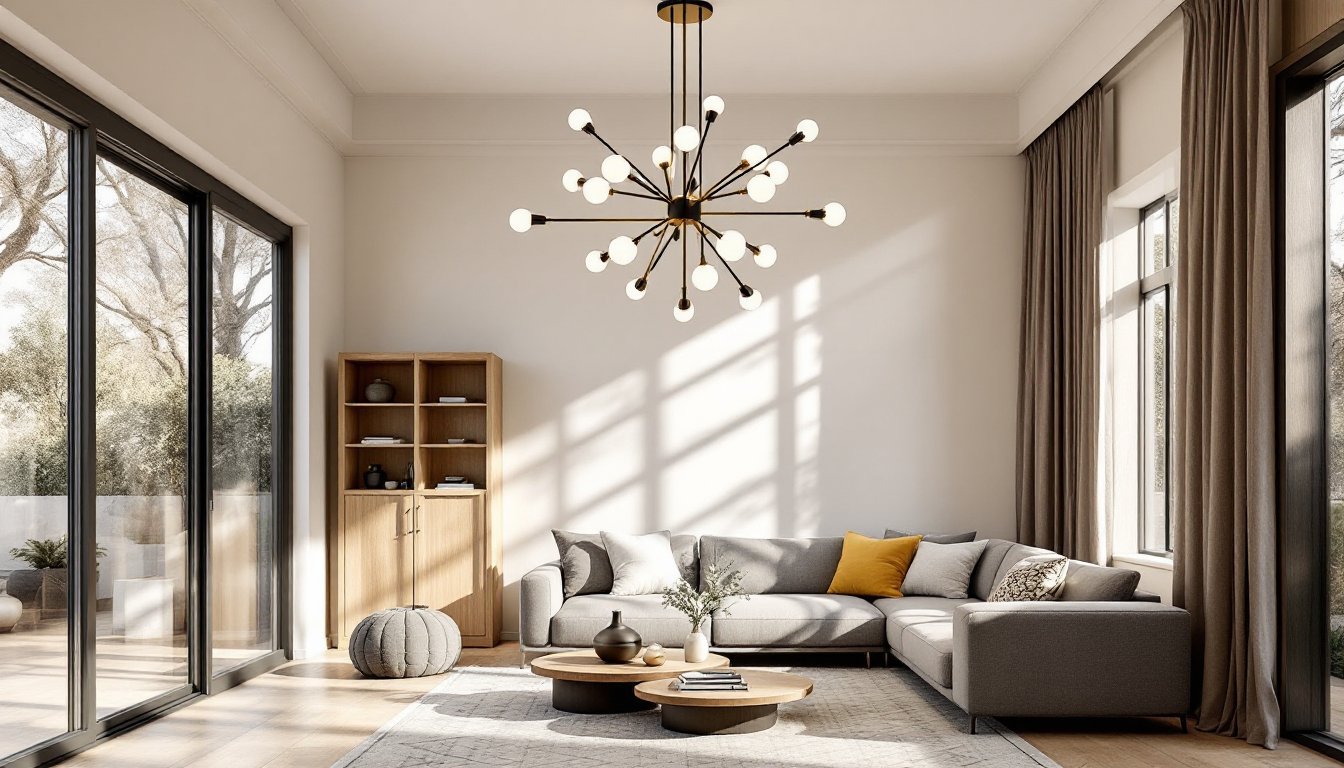
Minimalist geometry is the foundation. Look for clean angles, open frameworks, and uncluttered silhouettes. Think nested rings, stacked cylinders, or asymmetrical branch arms rather than ornate swags or dripping crystals.
Mixed materials are standard. Brass mixed with matte black, clear glass paired with brushed nickel, or concrete paired with chrome, combining finishes adds visual interest without excess detail. This approach feels intentional and designer-curated.
Negative space is intentional. Modern chandeliers often feature open areas between arms or pods, allowing light to spill through in interesting patterns. This reduces the visual weight of the fixture and prevents it from feeling heavy overhead.
Integrated LED compatibility matters. Most contemporary models are designed with LED in mind, whether they’re dimmable or offer warm-white/color temperature adjustments.
Don’t confuse “modern” with “minimal and cold.” Today’s modern aesthetic can be warm and inviting: it just prioritizes form and function over fussy detail. A model with honey-toned brass and warm dimming gives contemporary style without feeling sterile.
Materials And Finishes To Match Your Aesthetic
Material choice shapes both durability and visual weight. Brass and brushed gold remain trendy: they warm up a space and pair well with wood tones and earth colors. Matte black offers crisp, modern contrast, ideal for homes with darker cabinetry or metal accents. Chrome and polished nickel read as sleek and streamlined, though they can feel cold if the rest of the room lacks warmth.
Concrete and steel fixtures are gaining traction in industrial-modern homes. Concrete is durable but requires protective sealant and careful handling during installation (it’s fragile before curing). Steel arms or frames are sturdy and take on rich patinas over time.
Glass elements, whether clear, frosted, or smoked, diffuse light differently. Clear glass looks airy: frosted softens glare: smoked adds drama. The choice affects how the space feels under lit conditions.
Wood details aren’t off-limits. Walnut or black-stained wood beams paired with metal components appeal to mid-century and Scandinavian-inspired aesthetics.
When shopping, check finish durability. Lacquered or powder-coated finishes last longer than raw brass or bare steel, which oxidize and tarnish. Investing in sealed finishes means less maintenance and a consistent look over years. Sample finishes in natural and artificial light if possible, what looks refined in store lighting may clash at home.
Size, Scale, And Placement Considerations
Getting the scale right prevents an oversized fixture from overwhelming the space or an undersized one from looking lost.
The basic rule: A chandelier’s diameter should be roughly one-half to two-thirds the width of the dining or seating table below it (if centered over furniture). For a 10-foot-wide seating area, target a fixture 5 to 6 feet in diameter. For a living room without a central focal point, a 3 to 4-foot fixture often works best.
Height matters too. Hang the chandelier so its lowest point is at least 7 feet above the floor (or 6.5 feet if the room has a low ceiling). If mounting above a sofa, ensure it clears head height comfortably, roughly 18 to 24 inches above the tallest furniture in the area.
Electrical placement: The fixture must hang from an existing electrical outlet box in the ceiling. Standard residential boxes are rated for fixtures up to 50 pounds. Heavier modern chandeliers require a fan-rated or heavy-duty box (check the fixture’s weight rating and swap the box if needed). This is non-negotiable: an undersized box creates fire hazard.
Ceiling height and room proportions affect visual impact. A 12-foot ceiling can handle a larger, more dramatic fixture: an 8-foot ceiling needs something more compact. Measure twice, visualize the fixture in situ, and don’t rely on online photos alone, images don’t convey scale the way a cardboard mockup or a visit to a showroom does.
Smart Lighting And Energy Efficiency Options
Modern chandeliers pair exceptionally well with smart and LED technology. LED bulbs consume 75-80% less energy than incandescent and last 15,000 to 25,000 hours (versus 1,000 for incandescent). For a fixture with five or six bulbs running 4-5 hours daily, the energy savings are tangible.
Dimmable LED bulbs are essential for creating mood and reducing energy draw further. Not all LEDs are dimmable, cheap options flicker or don’t dim smoothly. Invest in dimmable 2700K (warm white) LEDs rated for the chandelier’s fixture type (A19 screw-in, GU10 pin-base, or specialty LED).
Smart bulbs and fixtures add automation. WiFi-enabled or Bluetooth LEDs let users adjust brightness and color temperature via phone or voice command, and some integrate with whole-home systems. Brands like Philips Hue and Wyze offer retrofit options: alternatively, seek chandeliers pre-wired for smart control.
Color temperature options (3000K warm, 4000K neutral, 5000K daylight) affect room feel. Warm white (2700-3000K) suits living rooms because it feels inviting and doesn’t fight natural daylight. Cooler options work in contemporary spaces but can feel harsh in cozy environments.
Consider PWM (pulse-width modulation) dimming if pairing with smart controls, it’s flicker-free and compatible with most LED bulbs. Install a CFL/LED-compatible dimmer to prevent stuttering or incompatibility.
Budget-Friendly Vs. Designer Chandeliers
Modern chandeliers span a vast price range, $150 to $5,000+, and knowing what drives cost helps identify the right fit.
Budget-friendly options ($150-$500) often use polymer or lightweight metal frames, simple finishes, and basic LED integration. Brands like IKEA, Wayfair, and Amazon Basics offer solid mid-century or modern designs that work in casual spaces. Downside: finishes may chip, materials feel less substantial, and durability is 5-7 years.
Mid-range fixtures ($500-$1,500) use quality brass, steel, or composite materials with sealed finishes, dimmable smart LED compatibility, and thoughtful design. These are typically 10-15 year investments. Designers often recommend this tier for good value.
Designer fixtures ($1,500+) come from brands like Tom Dixon, Apparatus, Lindsey Adelman, and Schoolhouse Electric. They feature premium materials (hand-blown glass, high-grade brass), bespoke finishes, limited production runs, and 15-20+ year lifespans. Cost reflects craftsmanship and exclusivity, not just function.
The practical choice: A homeowner doesn’t need a designer fixture if a $400 modern chandelier delivers the aesthetic and performs well. But, if the fixture will be a signature piece in a high-traffic space, stepping up to mid-range quality pays off in longevity and finish integrity. Always check return policies and reviews, even budget options should have consistent assembly and finish quality.
Conclusion
A modern chandelier elevates a living room by combining form and function in a way few fixtures can. Success comes from matching scale to the space, choosing materials that suit the home’s aesthetic, prioritizing LED and dimmer compatibility, and being honest about budget. Install it properly on a rated electrical box, hang it at the right height, and pair it with dimmable warm-white LEDs for instant impact. The right fixture becomes something the homeowner doesn’t just look at, it’s something they live with and enjoy every single day.