Table of Contents
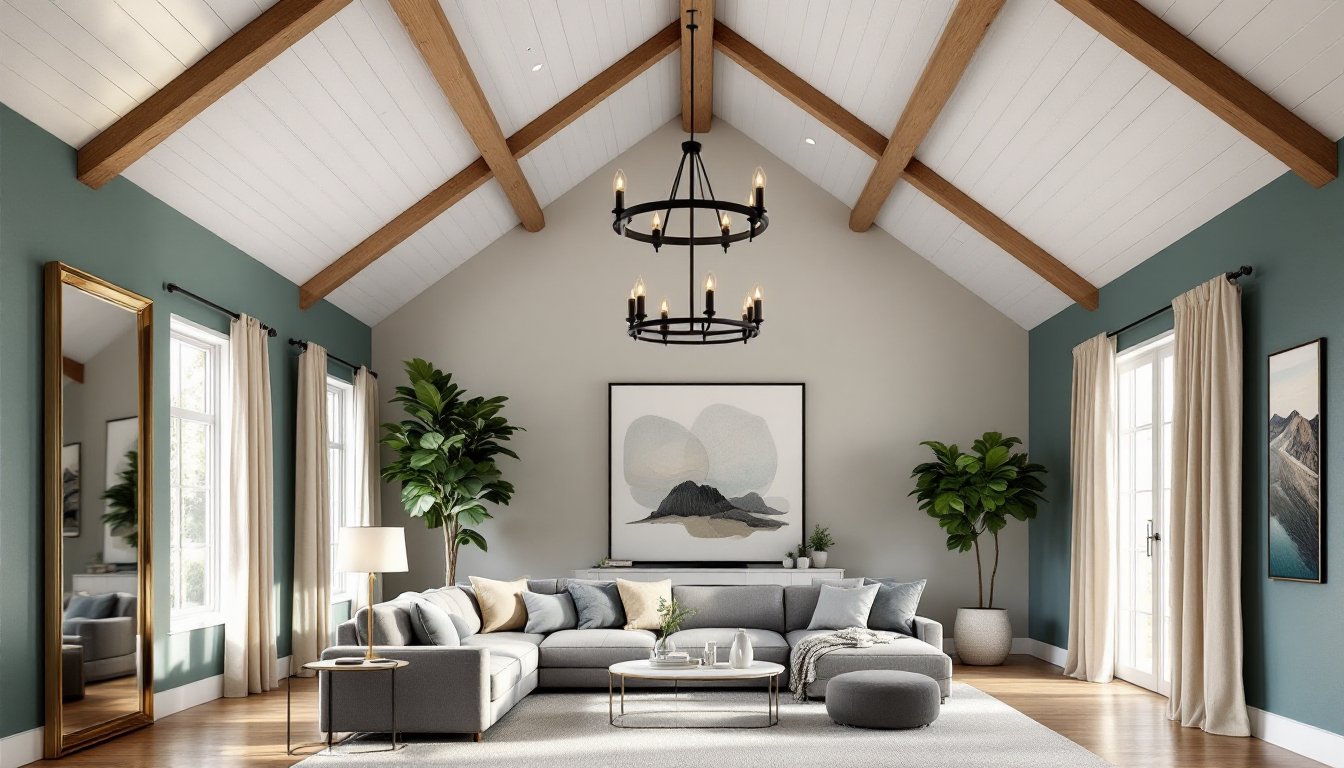
ToggleA vaulted ceiling transforms a living room from ordinary to extraordinary, instantly drawing the eye upward and making the space feel larger and more open. Whether someone’s working with an existing cathedral ceiling or planning to add vaulting to their home, the challenge isn’t the architecture, it’s making that tall, empty expanse work for the room’s functionality and style. The good news: with thoughtful design choices around lighting, color, materials, and furnishings, a vaulted ceiling becomes an asset that enhances both the visual appeal and livability of the space. Here are eight proven strategies to maximize that vertical real estate without letting the room feel cold or cavernous.
Key Takeaways
- Vaulted ceiling ideas thrive with layered lighting combining recessed fixtures, pendant lights, and wall sconces to prevent dark, cavernous spaces and create warmth at multiple heights.
- Bold wall colors like jewel tones, deep blues, and warm neutrals ground tall spaces better than light, neutral walls, making vaulted ceilings feel intentional rather than cold.
- Exposed beams—whether real timber or lightweight decorative faux beams—instantly add visual weight and architectural interest while breaking up the monotony of smooth vaulted surfaces.
- Large-scale furniture (8-10 foot sectionals), oversized area rugs (8×10 feet or larger), and tall bookshelves create visual presence and anchor the room’s proportions to a vaulted ceiling.
- Strategic use of plants, mirrors, and wall art at varying heights activate vertical space and prevent the room from feeling empty or cave-like.
- Paint techniques like two-tone ceilings, gradients, and coffered designs transform vaulted ceilings into bold focal points without requiring structural changes.
Maximize Height With Strategic Lighting Solutions
Vaulted ceilings demand lighting that works at multiple heights, not a single central fixture leaving the upper reaches dark and dramatic (unless that’s the goal). The key is layering: combine ambient lighting, task lighting, and accent lighting to make the space feel both warm and functional.
Recessed lighting works well for general illumination: space fixtures 4 to 6 feet apart to avoid shadows. Pendant lights hung from the ceiling at 12 to 18 inches below the peak create visual interest and focus light where people actually sit. For track lighting or monorail systems, angles can be adjusted to highlight architectural details or artwork without wasting light on the empty void above.
Wall sconces flanking a fireplace or spanning the side walls help anchor the vertically stretched space and provide cozy ambient light. An overhead chandelier in a slightly smaller scale than a traditional living room works well if hung 7 to 9 feet above the seating area, close enough to feel intimate, far enough to be in proportion to the ceiling height.
Consider dimmers on all circuits: they let homeowners shift the mood and save energy when full brightness isn’t needed. LED bulbs rated 2700K (warm white) prevent the clinical feel that comes with harsh overhead light in a big room.
Choose Bold Wall Colors and Finishes
The instinct with vaulted ceilings is often to keep walls neutral and light, but that can backfire, making the room feel washed out and cold. Instead, bold, saturated wall colors ground a tall space and make it feel intentional rather than accidental.
Dark jewel tones, deep blues, greens, or charcoal, work surprisingly well on side walls or an accent wall. They absorb light slightly (so proper artificial lighting matters) but create a cocooning effect that counteracts the exposed feel of a high ceiling. Warm neutrals like taupe, greige, or soft terracotta also balance height without the visual heaviness of pure white.
Matte finishes on walls minimize glare bouncing off vertical surfaces in a space where light travels farther and faster. Eggshell or satin are more practical than matte if the walls see traffic or potential scuffs. Textured wall treatments, shiplap, board-and-batten wainscoting, or applied paneling, break up expanses of flat wall and add visual rhythm without requiring a full paint commitment.
Consider a contrasting ceiling color separate from the walls. Painting the sloped ceiling a soft gray, warm white, or even a pale version of the wall color creates definition and prevents the ceiling from disappearing. Avoid stark white ceilings, which read as bland and clinical in tall spaces.
Add Architectural Interest With Exposed Beams
Exposed beams, whether structural or decorative, instantly soften the severity of a smooth vaulted ceiling and add visual weight to anchor the upper half of the room. Real timber beams are beautiful but require accurate measurement, reinforced framing, and often a structural engineer’s involvement if they’re supporting weight. Decorative beams (non-load-bearing) are a practical alternative: they’re installed to the underside of the existing ceiling and cost far less while delivering the same visual impact.
Spacing matters: beams 4 to 6 feet apart create rhythm without feeling cluttered. Material choices range from reclaimed wood (character, but pricey and variable) to new-cut timber or engineered wood that mimics barn beams. Faux beams made from lightweight polyurethane or foam are budget-friendly, don’t require reinforced framing, and are simple enough for a DIYer with basic carpentry tools to install using a brad nailer and construction adhesive.
Finish exposed beams to match the room’s palette: dark stain for contrast against light ceilings, whitewashed for a softer farmhouse feel, or painted a muted tone that complements wall color. Leave the spaces between beams unfinished or install lightweight panels (shiplap, bead board) to add more texture and definition. Beams also provide excellent anchor points for hanging pendant lights or decorative elements.
Incorporate Statement Ceiling Designs
A vaulted ceiling is a blank canvas for bold design choices that would overwhelm a standard 8-foot room. Coffered ceilings, grids of beams creating recessed squares or coffers, add geometric sophistication and break the monotony of a smooth vault. Expect to hire a skilled carpenter or contractor for structural coffers: foam versions are lighter and easier for a determined DIYer with help, though they require precise layout and sealing.
Wainscot or bead board applied to a sloped ceiling softens the angle while adding texture. Install it from the wall up to roughly the eaves line or a natural breaking point: the unfinished ceiling above becomes the focal point rather than the entire vault. Paint the wainscot a soft white or light gray and the upper ceiling a contrasting tone to define zones.
Arched or barrel vault effects can be achieved with curved paneling or creative drywall finishing, though these require skill. For most DIYers, the smartest move is a bold paint treatment: a gradient from darker at the eaves to lighter near the peak, or vice versa, creates depth without structural changes. Two-tone ceilings (different colors for each slope if there are multiple angles) add dimension and visual interest that reads expensive even though modest cost.
Stenciled patterns or a mural on the ceiling are becoming popular: they require ladder work, steady hands, and a clear design, but the payoff is a truly unique focal point.
Balance Scale With Furniture Placement
Furniture selection and layout are critical in a tall room where a typical sofa or side table can look undersized and adrift. Avoid scattering small pieces: instead, create deliberate groupings with larger statement pieces that anchor the space and dialogue with the ceiling’s height.
A substantial sectional or oversized sofa (typically 8 to 10 feet long) commands visual presence without looking cramped. Layer in tall bookshelves, oversized wall art, and high-backed chairs to draw the eye horizontally and create a sense of enclosure even though the open space above. An area rug at least 8×10 feet (or larger for big rooms) anchors furniture and defines the seating zone, preventing the room from feeling scattered.
Tall window treatments also help. Floor-to-ceiling curtains or drapes that extend slightly above the main wall height (not confined to a single window) make the ceiling feel intentional rather than by accident. Mount curtain rods high and let fabric pool slightly at the bottom for a tailored, grounded look.
Two-level furniture arrangement works well: place primary seating at the main floor level and consider a secondary grouping on a raised platform, mezzanine, or upper sitting nook if the room layout and budget allow. This breaks the verticality and creates functional zones within the tall space. Proportional side tables, lamps, and art scaled to the room (not dollhouse-sized) reinforce that the space is intentionally designed for humans, not giants.
Use Plants and Vertical Elements
Living plants soften hard angles and add organic texture to a room dominated by straight lines and open space. Tall potted plants (floor-standing fiddle leaf figs, monstera deliciosa, or bamboo palms) fill vertical gaps and create a sense of boundary without walls. Hang planters from the ceiling or high wall shelves to activate the upper third of the room with greenery that’s visible from the seating area.
Vertical wall gardens, tiered shelving with multiple small plants, trailing ivy, or a living moss wall, add natural texture and color without taking up floor space. They work especially well on an accent wall or flanking a fireplace, drawing the eye across the wall rather than straight up. Group plants in odd numbers (three, five, or seven) for a natural, intentional look rather than scattered singles.
Wall art and mirrors also count as vertical elements that populate the tall space. Large-scale artwork (4 to 6 feet tall) reads well against high walls: avoid small, timid pieces that disappear. A floor-to-ceiling mirror or series of mirrors reflects light and creates visual expansion while making the room feel less cave-like. Hang mirrors at the wall-ceiling junction or at intervals down the wall to create multiple focal points at varying heights.
Textile art, tapestries, and woven wall hangings add warmth and softness to hard architectural lines. Lean into layers: plants + art + natural light creates a living room that feels both grand and welcoming.
Conclusion
A vaulted ceiling is an asset when approached strategically. The combination of layered lighting, bold color choices, architectural details, statement designs, properly scaled furniture, and living elements transforms empty vertical space into a defining feature of the room. Start with one or two changes, better lighting and a fresh paint color, and build from there. The goal is making the height feel intentional and lived-in, not like an accident of architecture. With these eight strategies in place, a vaulted living room becomes a space that’s both visually impressive and genuinely comfortable to inhabit.