Table of Contents
ToggleA man’s living room should reflect who he is, a place where he can genuinely relax, entertain friends, and feel at home. Too often, guys default to whatever came with the apartment or lean on a handful of furniture pieces that just don’t work together. The good news? Creating a stylish, functional men’s living room doesn’t require an interior design degree or a massive budget. It’s about making intentional choices: picking colors and materials that hold up to real life, selecting seating that’s actually comfortable enough to spend hours in, and organizing everything so the space functions smoothly. This guide walks through seven practical strategies to transform a bland living room into a space that’s genuinely inviting and reflects your personality.
Key Takeaways
- Men living room ideas work best when built on intentional choices—selecting a bold color palette, durable seating, and smart storage instead of defaulting to bland, mismatched furniture.
- Invest $800–$2,500 in a quality sectional with 36–40 inches of seat depth and firm lumbar support, as this primary furniture piece will outlast cheaper alternatives by over a decade.
- Layer three types of lighting (ambient, task, and accent) with warm white bulbs at 2700K to transform a flat, cold space into a genuinely inviting living room.
- Hide cables and integrate technology like wireless speakers and smart remotes so tech enhances rather than dominates your men’s living room aesthetic.
- Display personalized decor and artwork that reflect your interests—a statement piece above the sofa, curated books, or functional items like vintage maps—rather than generic motivational signs.
- Use the 60-30-10 color rule and incorporate woven baskets and closed storage to keep the space functional and clutter-free without sacrificing personality.
Choose a Bold Color Palette
The biggest mistake guys make with color is playing it too safe, beige walls, gray furniture, nothing that takes a stand. Bold doesn’t mean neon or clashing shades. It means choosing a primary wall color that has presence and building around it intentionally.
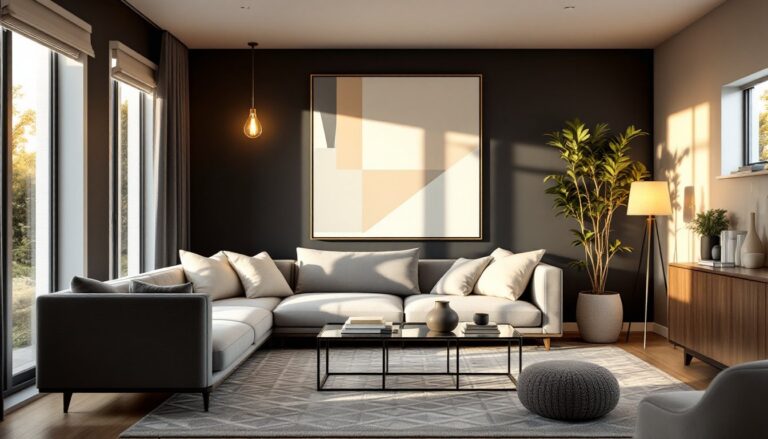
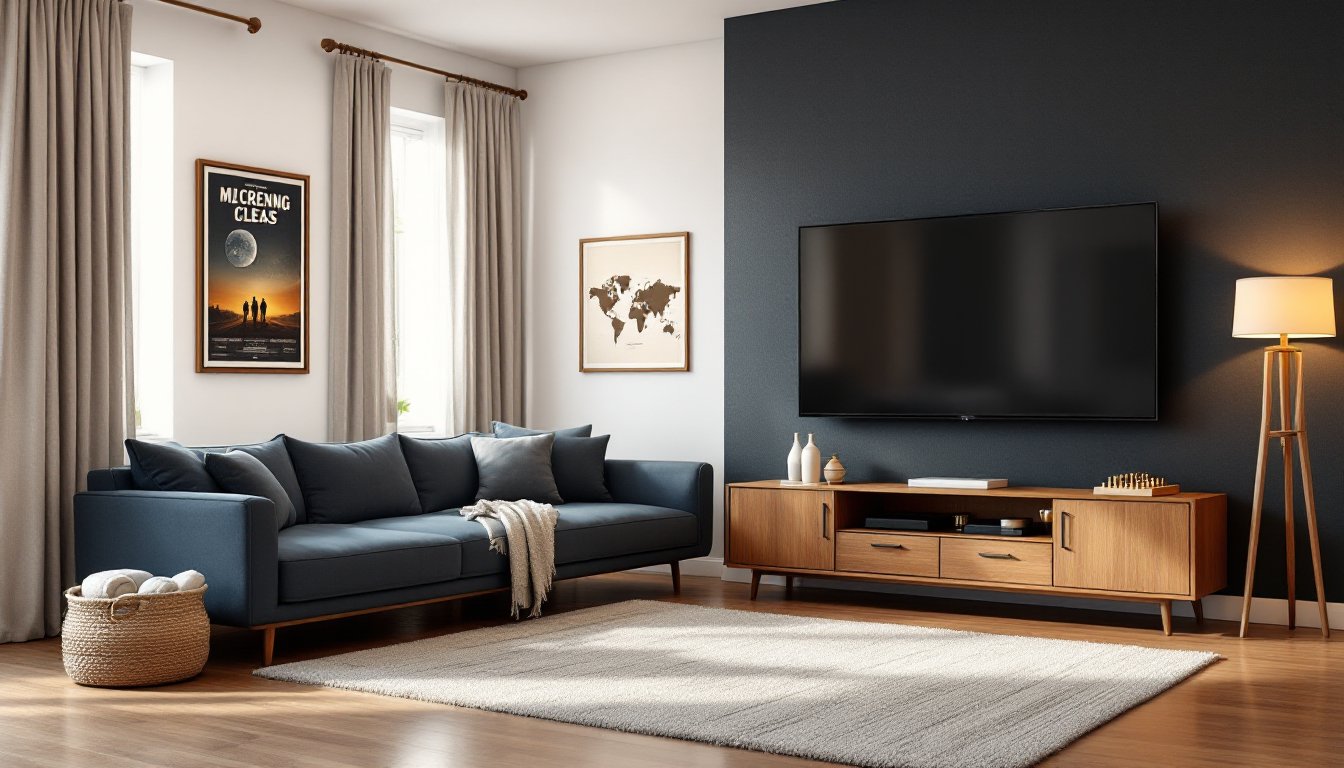
Start with one accent wall in a deeper tone: charcoal, forest green, navy, or even a warm terracotta. This creates visual interest without overwhelming the room. Keep the remaining walls neutral, soft whites, warm grays, or muted taupe work well as a counterbalance.
For furniture, layer in complementary colors through your sofa and chairs. A slate-blue or deep gray sectional anchors the room, then bring in secondary colors through throw pillows, a rug, or an ottoman. Consider the 60-30-10 rule: 60% dominant color, 30% secondary, 10% accent. This keeps the space cohesive while letting personality show through.
Material matters too. Darker fabrics hide stains and wear better, but they also absorb heat and can feel heavy. Mix in a quality wool rug or linen accents to break up density and add texture. The key is intention, every color choice supports the overall mood you’re after.
Invest in Quality, Comfortable Seating
You’ll spend more hours on your sofa than any other piece of furniture in the room. Buying cheap pays twice, once when you buy it, and again when you replace it three years later.
Look for a sectional or deep sofa in durable fabric (leather, performance fabrics like Crypton, or heavy-weight linen). Depth matters: aim for a seat depth of 36–40 inches so you can actually lounge without your feet dangling. If you’re under 6 feet, you might go shorter: if you’re taller, depth and length are non-negotiable.
Test before buying. Sit for at least five minutes. Can you lie down if you want to? Does the back support your neck if you sink in? A sofa with firm cushions and good lumbar support beats one that looks slick but collapses after a month.
Add a quality recliner or accent chair if space allows, leather or sturdy fabric, with clean lines that match your aesthetic. This gives you flexible seating for movie nights or when you have guests. A ottoman with storage inside pulls double duty: extra seating and a place to tuck throw blankets, remotes, or magazines.
Budget for quality: expect to spend $800–$2,500 for a solid sectional that lasts 10+ years. That’s roughly $7–20 per month over a decade, worth it for comfort and durability.
Incorporate Smart Storage Solutions
A functional living room isn’t cluttered. Smart storage keeps essentials accessible without making the space feel like an afterthought closet.
Built-in shelving works best if you can install it, but a combination of closed and open storage is realistic for most rentals or situations where permanent changes aren’t possible. A media console with closed cabinets hides electronics, streaming boxes, remotes, and cables. Open shelves above display books or a few curated pieces, not everything.
Use a sideboard or credenza along one wall for drink storage, board games, or extra seating supplies. Woven baskets under a console table or beside the sofa contain throw blankets and pillows without looking chaotic. Label or use opaque containers so visual clutter stays hidden.
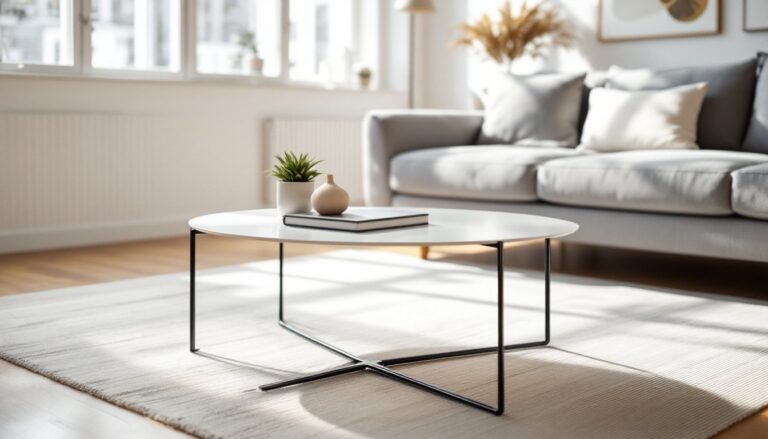
Keep the “coffee table clutter rule” in mind: coasters, a single design book, and a small plant are fine. Stacks of magazines, remotes, and loose change aren’t. If you can’t see the table surface, your storage isn’t working.
Wall-mounted shelves above the sofa or beside a TV free up floor space and create vertical interest. Aim for one main storage piece (console or shelving unit) that anchors the room, then supplement with accent pieces. This prevents the “too much furniture” feeling while keeping everything you actually use within arm’s reach.
Add Personalized Decor and Artwork
Generic wall art doesn’t cut it. A living room should tell a story about who lives there, not feel like a hotel lobby.
Invest in one or two quality pieces of artwork that genuinely matter to you. This might be a vintage concert poster, a large-scale photograph, an abstract piece that matches your color palette, or even a framed collection of related images. A 3-by-4-foot statement piece above the sofa commands attention without requiring a gallery’s worth of smaller frames.
If you’re uncertain about art, start with something functional that looks good: a well-designed world map, a sports memorabilia shadow box, or a framed architectural print. At minimum, it should cost more than the frame it’s in and connect to something you actually care about.
Add a few personal touches: a shelf with books you’ve actually read, a vintage bar cart, a chess set, or a model of something you’re interested in (cars, planes, architectural models). These shouldn’t feel forced or cluttered, one or two strong personal pieces beat five mediocre ones.
Skip the generic motivational signs and novelty items. You’re after sophisticated personalization, not dorm-room energy. Quality over quantity applies to decor just as much as it does to furniture. One well-chosen piece that reflects your taste beats a dozen impulse buys from a big-box store.
Integrate Modern Technology
A modern living room needs tech, but it shouldn’t look like a Best Buy display. Hide cables, mount your TV at eye level, and invest in audio quality that matches your screen.
In-wall cable management keeps power cords and HDMI lines out of sight. If permanent installation isn’t possible, use conduit or cable sleeves to bundle wires along the baseboard or behind furniture. Wireless speakers (Bluetooth or Wi-Fi-enabled) reduce visible clutter and deliver better sound than TV speakers.
For streaming and entertainment, a media console with pass-through ventilation keeps your devices cool and organized. One central control system (a smart remote or app) beats having five different remotes scattered around. A universal remote or a hub like an Apple TV or Roku simplifies things.
Consider adding smart lighting that you control from your phone, no need for unnecessary switch plates or visible dimmer installations. Ambient lighting tied to your entertainment system (color-changing bias lighting behind the TV, for example) enhances movie nights without screaming “look at the tech.”
Audio matters more than most guys realize. A good soundbar ($300–$600) beats cheap TV speakers by miles. If you’re serious about sound, a 2.1 or 5.1 system with a subwoofer tucked in a corner adds immersion without dominating the room. Tech should enhance the living room experience, not take it over.
Layer Your Lighting for Ambiance
Bad lighting kills even a beautifully designed room. A single overhead fixture leaves the space feeling cold and flat. Layer three types of light: ambient, task, and accent.
Ambient light (your baseline) comes from ceiling fixtures, but supplement it with table lamps on side tables flanking the sofa. Aim for warm white bulbs (2700K color temperature) that feel inviting, not the harsh daylight of a garage. A floor lamp in a reading corner adds depth and makes the space feel lived-in.
Task lighting lets you actually see what you’re doing, reading, board games, or work. A desk lamp or focused floor lamp handles this without competing with ambient light. Position these away from your TV to avoid glare.
Accent lighting adds character: sconces on either side of artwork, bias lighting behind the TV, or a pendant light fixture with visual interest. This layer separates a finished room from one that feels like a furnished rental.
Dimmers on most circuits give you flexibility to adjust mood throughout the day and evening. Avoid overly bright bulbs: 60–75 watts equivalent (actual brightness, not incandescent equivalency) is typically enough. Invest in fixtures that match your style, clean-lined for modern, vintage brass for eclectic, structured metal for industrial. Lighting is one of the quickest ways to transform a space from okay to genuinely inviting.
Conclusion
Creating a men’s living room that works, and that you actually want to spend time in, comes down to making deliberate choices. Pick a color scheme with backbone, invest in seating you’ll use for years, hide the chaos with smart storage, add touches that reflect who you are, integrate tech without letting it dominate, and light the space properly. None of this requires a design background or unlimited budget. It just requires thinking through what you actually want the room to do and building from there. The result is a space that’s genuinely yours: comfortable, functional, and worth showing off.