Table of Contents
ToggleA well-chosen set of 2 modern living room chairs can transform a space faster than any other furniture investment. Whether flanking a fireplace, anchoring a reading nook, or filling negative space beside a sofa, paired chairs define the room’s style while creating functional zones. The challenge isn’t finding options, it’s narrowing them down. Modern living room chairs in 2026 span minimalist silhouettes, eco-friendly materials, and flexible arrangements that work in everything from apartments to family rooms. This guide walks through selecting, sizing, and styling the right pair for a space and lifestyle.
Key Takeaways
- A set of 2 modern living room chairs creates visual balance and frames architectural features while offering flexibility for multiple configurations—from face-to-face conversation layouts to zone-defining angles.
- Performance fabrics like polyester blends resist staining and fading, while natural fibers like linen and leather offer warmth and luxury but require more maintenance depending on your room’s traffic and sunlight exposure.
- Proper sizing is critical: measure your space with cardboard cutouts to ensure two modern living room chairs fit without blocking foot traffic, and choose seat heights (16–18 inches) and depths (26–32+ inches) based on comfort needs.
- Coordinate styling elements like throw pillows, rugs (6’×8′ minimum), and lighting to anchor the paired chairs as an intentional grouping and prevent them from feeling disconnected in open-plan layouts.
- Invest in hardwood frames (kiln-dried maple or oak) with doweled and corner-blocked construction rather than stapled joints to ensure your modern chair pair remains durable and functional for years.
- Arrange your modern living room chairs with intention—whether face-to-face for intimate conversation, angled at 45 degrees for relaxed appeal, or perpendicular to define seating zones in larger rooms.
Why Choose a Set of 2 Modern Living Room Chairs
Buying chairs as a matching pair offers practical and aesthetic advantages over a single statement piece or mismatched seating. Two identical or complementary chairs create visual balance, establish scale in a room, and frame architectural features like windows or fireplaces without requiring the commitment (or cost) of a full sectional.
Sets also simplify the decision-making process. Designers and manufacturers intentionally coordinate modern chair pairs, meaning legs, fabric, arm heights, and depth already work together. This removes the guesswork of color-matching or finding pieces with proportional harmony.
From a flexibility standpoint, two chairs can be arranged in multiple configurations: facing each other for conversation, angled toward a central coffee table, or separated to define different zones within an open-plan room. They’re also easier to move than heavier pieces, making them ideal for renters or anyone who likes to refresh layouts seasonally.
Finally, paired chairs often feel more curated and intentional than a solo accent chair, signaling that the space has been thoughtfully designed rather than assembled randomly.
Key Design Styles and Materials to Consider
Contemporary and Minimalist Designs
Modern living room chairs in 2026 lean heavily toward clean-lined, fuss-free silhouettes. Contemporary designs typically feature tapered legs (wood or metal), low-back proportions, and neutral upholstery, think charcoal linen, cream wool, or soft gray. These chairs work well in spaces with visible architecture, like high ceilings or exposed brick, because they don’t compete visually.
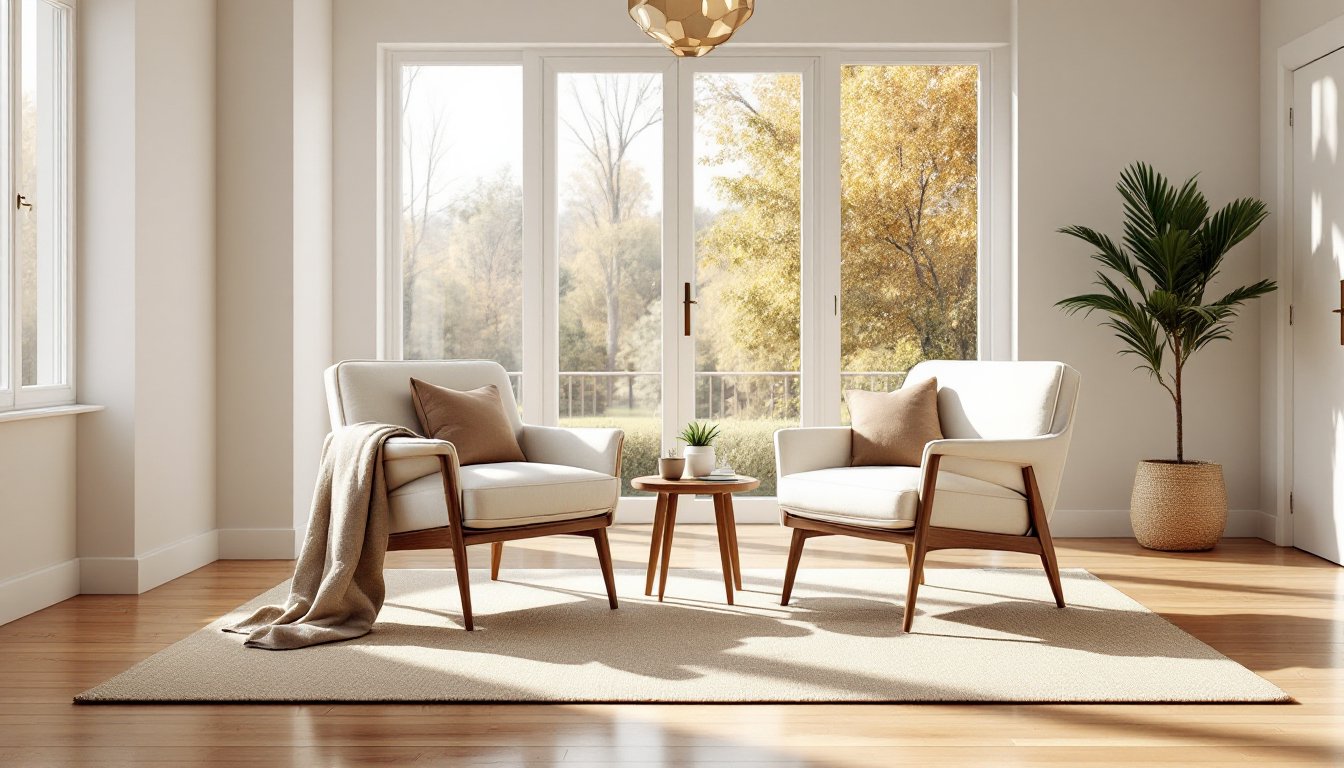
Minimalist pairs take simplicity further, stripping away ornament entirely. Expect geometric frames, monochromatic fabric, and functional armrests or none at all. A pair of mid-century modern–inspired lounge chairs with splayed walnut legs and streamlined cushioning exemplifies this approach. These designs age well because they’re not trend-dependent.
Higher-end contemporary sets often incorporate curved or sculptural frames that add visual interest without clutter, think molded plywood shells or gently contoured backrests. Styling these requires restraint: keep surroundings minimal, let the chairs breathe, and rely on good lighting to showcase their form.
Popular Materials and Upholstery Options
Upholstery choice impacts comfort, durability, maintenance, and price. Performance fabrics (polyester blends, solution-dyed acrylic) resist staining and fading, essential if the room sees kids, pets, or sunlight. Brands like Crypton and Sunbrella make high-performance options that feel soft rather than plastic-like.
Natural fibers (linen, cotton, wool) offer warmth and breathability but require more care. Linen shows wrinkles and pilling if not pre-treated: raw cotton stains easily. These work best in low-traffic lounging zones or if refresh cycles feel acceptable.
Leather and vegan leather convey luxury and age gracefully if maintained. Genuine leather develops patina and hides minor wear: vegan alternatives (polyurethane) cost less but may crack under extreme temperature or humidity swings. Both require seasonal conditioning to prevent drying.
Frame materials matter equally. Hardwood frames (kiln-dried maple, oak, or ash) outlast softwood by decades. Metal frames (steel or aluminum) are lighter, more contemporary, and great for industrial or Scandinavian schemes. Check that frames are doweled and corner-blocked, not stapled, construction quality predicts longevity.
Sizing, Comfort, and Space Planning Tips
Measure twice before ordering. A standard modern lounge chair runs 30 to 32 inches wide and 30 to 36 inches deep. Pair that footprint and ensure two chairs plus a small table fit your space without blocking foot traffic or doors. Use a tape measure and cardboard cutouts to mock up placement, digital room planners help but can deceive scale.
Seat height and depth affect usability. Most modern chairs sit 16 to 18 inches from floor to cushion, comfortable for most adults. Deeper seats (32+ inches) feel lounge-like: shallower seats (26 inches) suit smaller frames and work in tighter spaces. Try before buying if possible: return policies vary widely.
Armrest height shapes functionality. Low or no arms (8 inches or less) preserve sightlines and allow side-table access. High arms (25+ inches) provide support but can feel confining in small rooms. Mid-height arms (10 to 15 inches) offer balance.
Consider the room’s other elements. Pair chairs with a console table, low ottoman, or small accent rug to anchor the grouping visually. In open-plan layouts, angle or stagger the chairs slightly to define the seating zone without appearing fortress-like. If the room receives strong afternoon sun, invest in fade-resistant upholstery or install window treatments, UV exposure ages fabric fast.
Climate matters too. Humidity and temperature swings affect wood and certain fabrics. In very dry regions, leather may crack: in damp basements, natural fibers risk mildew. Acclimate new pieces to the room for a few days before permanently placing them.
Styling and Arranging Your Paired Chairs
Two modern chairs work hardest when arranged intentionally. Face-to-face positioning (angled inward, 3 to 4 feet apart) encourages conversation and works well with a low side table or ottoman between them. This layout suits reading nooks, offices doubling as guest seating, or intimate corner groupings.
Angular or perpendicular arrangements feel more relaxed. Angle one chair toward the other at 45 degrees, or set them at right angles to a focal wall. This works in larger rooms where you want defined seating without a formal living-room-parlor vibe.
Accessories bridge the pair. Match throw pillows in fabric and color, or choose pillows in complementary patterns, geometric paired with solid, for example. A shared throw blanket draped over one chair’s arm suggests these pieces belong together. Keep accessories minimal: modern designs are strongest when uncluttered.
Lighting enhances function and drama. Add a floor lamp beside each chair (arc or tripod styles suit modern aesthetics) or a single sculptural pendant above the pair. This layers the room’s light and makes the seating zone feel intentional.
Floor materials ground the pair. A neutral rug (6’×8′ minimum for two chairs) anchors them and softens acoustics. Pair chairs on polished concrete, hardwood, or tile without a rug can feel disconnected: if space is tight, even a 4’×6′ rug helps.
Color should tie back to the room’s palette. If walls are soft white or warm gray, neutral fabrics (cream, taupe, greige) recede: bold upholstery (deep blue, terracotta, sage) becomes a statement. Either approach works, consistency matters more than timidity.
Conclusion
A set of 2 modern living room chairs is a smart, adaptable investment that works across design aesthetics and room sizes. By prioritizing quality frame construction, durable upholstery, and proper sizing, buyers ensure the pair remains functional and stylish for years. Whether styled minimalist or layered with texture, paired chairs create intentional spaces that feel curated and confident.